


Recent Posts
Turf Care Tips from Southers Marsh
TweetGreens Aeration
No one like aerated greens, and we don't like doing it. However, it is a necessary maintenance practice to make sure the greens survive and are at peak playability.
Fertilizer and Crabgrass Control Tips
By Willie Stearns - SMGC Superintendent - April 20, 2011
As I’m sure you don’t need me to tell you, this is the worst April weather we have had since we opened the course 10 years ago. Consequently, in terms of growing grass we are also behind. I figure we are about 2 weeks behind where we normally are for this time of year, in contrast to last year when we were 3 weeks ahead of normal.
Mostly try to be patient for the time being. You don’t want to push the turf too hard if it is not actively growing. It is actually a great time for your lawn, because it looks green and lush and yet doesn’t need to be mowed, so you have more time to play golf.
Fertilizer
Most of the turf care questions we get at this time of year revolve around when to put the first fertilizer application out. The first thing we learn in turf school is that every lawn or golf course is different, and just because your neighbor is doing one thing, doesn’t mean that’s what you should do. That being said, on our fairways and roughs (which would best approximate a lawn), we make two fertilizer applications per year. One in late November/early December when the grass is green but not growing, and one in mid-May to mid-June, depending on how the turf looks.
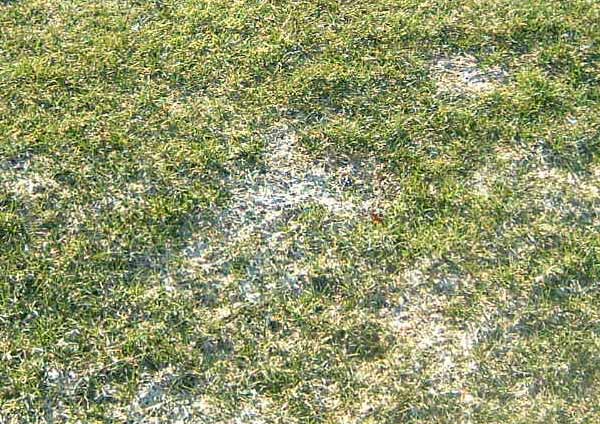
For our spring application, the timing is based entirely on how the turf looks. If you are dealing with winter damage, which I’m sure a lot of you are after this past winter, you can apply fertilizer to those spots any time now. If there is green grass within the damaged turf, it should grow back without being reseeded, so give it a little fertilizer and resist the temptation to rake out the dead grass, which could damage the good plants that are going to fill in the damaged area. If you have big areas with no green grass in them (and you may have to look closely), you probably should aerate and seed those spots (with a seed mix appropriate for the amount of sun and traffic that the area gets). For your more general fertilizer application, if your lawn looks good from last year, I would recommend waiting to fertilize until it starts going off color a bit.
Crabgrass Control
The other big question at this time of year is about crabgrass control. I think the prevailing advice, especially from fertilizer advertisements that want you to rush right out to the store to buy their product, encourages people to apply these products too early in the year. I don’t think I’ve ever seen a crabgrass problem in the Northeast in May, but I sure have seen it in August. If you apply your crabgrass control in April, how much of that product will still be effective four months from now when you really need it? Especially this year, with everything behind schedule, I think you could wait at least a few weeks before putting it out. At SMGC, we usually put ours out in mid-May, and if you have played at Southers Marsh, you know it is very rare to see crabgrass on our course. One important note for this spring is to make sure you don’t apply preventative crabgrass control to thin or damaged areas, or areas you have reseeded or need to reseed, as this will prevent recovery or new growth. Wait until the grass is recovered or established (usually 3 or 4 mowings) or skip it entirely. Any herbicide is going to have a negative impact on new or damaged turf.